
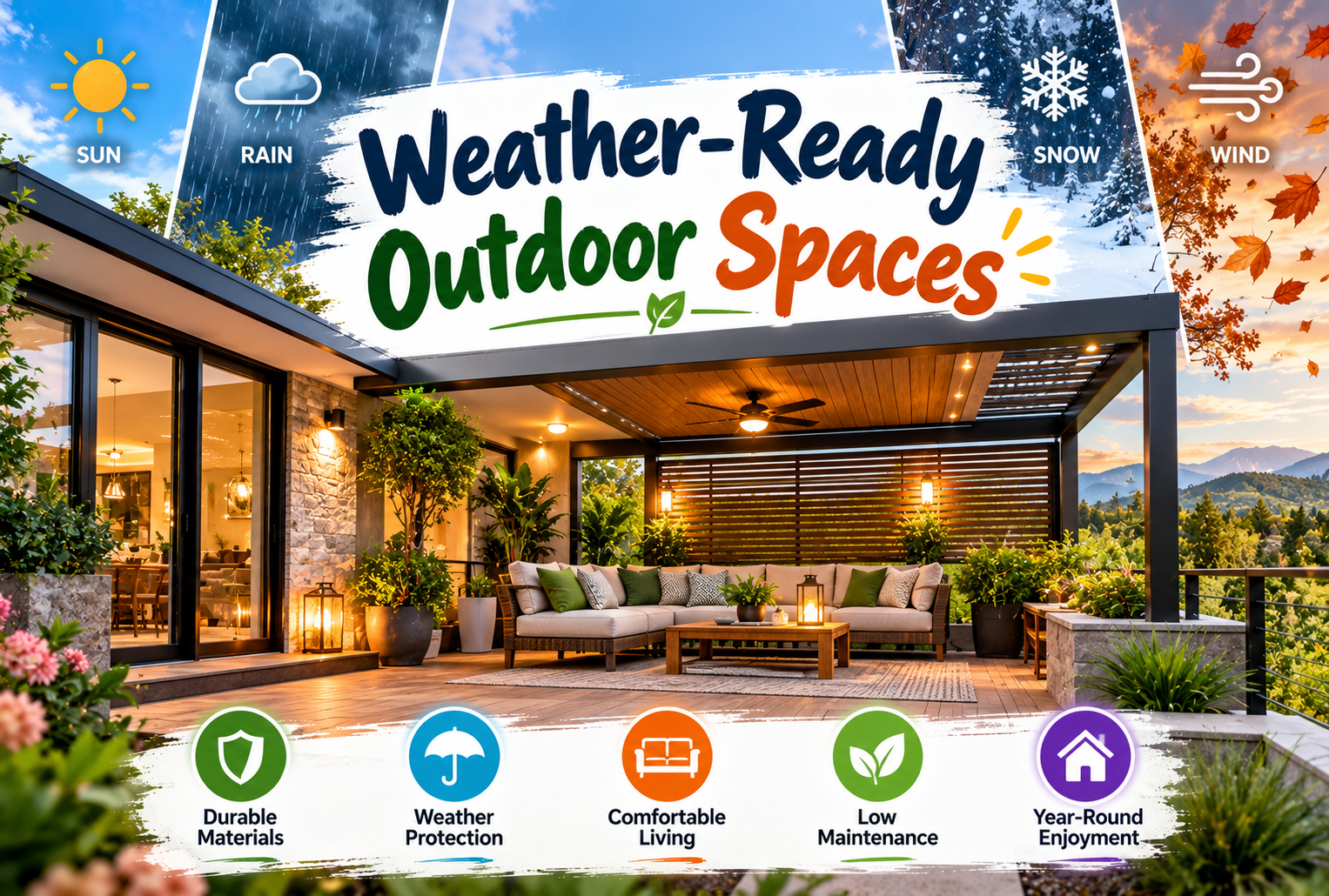
Make Your Outdoor Space Comfortable Throughout the Year
A balcony, patio or garden can become one of the most relaxing areas of a home. It can provide space for morning tea, family gatherings, gardening or simply enjoying fresh air. However, changing weather conditions can make these areas difficult to use throughout the year.
In India, outdoor spaces may face strong summer sunlight, dust, humidity and heavy monsoon rainfall. Good planning can help homeowners create weather-ready outdoor spaces that remain practical and attractive across different seasons.
A recent Hindustan Times article on weather-ready outdoor design highlights the importance of choosing appropriate materials, planning shade and managing rainwater. Here are some practical ideas homeowners can consider.
1. Add Shade Without Blocking Natural Light
Direct sunlight can make balconies and patios uncomfortable, particularly during hot afternoons. Creating shaded areas can make outdoor spaces more usable without requiring a complete renovation.
Homeowners can consider:
-
Pergolas for partial shade over seating areas.
-
Outdoor umbrellas for flexible protection from sunlight.
-
Shade nets for balconies and garden corners.
-
Climbing plants to create natural shade where suitable.
-
Weather-resistant curtains for covered verandas.
The best option depends on the size of the space, the direction it faces and the amount of sunlight it receives.
For small apartments, a compact umbrella or adjustable shade screen may be more practical than a permanent structure. Always ensure that balcony fixtures are safely installed and permitted under local building rules.
2. Choose Materials That Suit Local Conditions
Outdoor furniture and flooring must withstand more than everyday use. Strong sunlight can fade some finishes, while moisture can damage untreated wood and encourage corrosion in unsuitable metals.
When selecting materials, consider durability, maintenance and weather resistance together.
For example, properly treated timber can offer a natural appearance, while suitable outdoor metals may work well for furniture frames. Natural stone and outdoor-rated tiles can be considered for flooring, provided they are appropriate for the local climate and have a slip-resistant finish.
Avoid choosing flooring based only on appearance. A surface that becomes slippery when wet or extremely hot in sunlight may not be comfortable for daily use.
Before purchasing furniture, check the manufacturer's care instructions and confirm whether the material is intended for outdoor exposure.
3. Plan Drainage Before the Monsoon
Water accumulation is one of the most common problems in outdoor areas. Poor drainage can leave patios muddy, damage plants and create moisture problems around walls.
A well-designed outdoor area should allow rainwater to move away safely. Depending on the property, useful solutions may include:
-
Keeping existing drains clear of leaves and dirt.
-
Using suitable slopes to direct water towards drainage points.
-
Installing permeable surfaces where appropriate.
-
Choosing planters with proper drainage holes.
-
Avoiding arrangements that block water outlets.
For larger gardens, professional landscaping advice may help identify drainage problems before they become expensive repairs.
Monsoon-ready design is not only about preventing puddles. It also helps protect outdoor furniture, planting areas and the surrounding building structure.
4. Select Plants According to the Climate
Plants can add colour, privacy and a natural feel to balconies and gardens. However, not every plant grows well in every location.
Before buying plants, assess sunlight, soil, humidity, water availability and the time you can spend on maintenance. Native and climate-adapted plants may be easier to maintain when selected for the conditions in your area.
For a balcony, consider compact plants that suit the available light and container size. In a larger garden, a combination of ground cover, shrubs and suitable trees can create visual interest while supporting the local environment.
You can explore Wikipedia's overview of native plants to understand why plants naturally suited to a region can be valuable in landscape planning.
Remember that plant selection should be based on local conditions rather than appearance alone.
5. Make the Space Useful for Everyday Living
A beautiful outdoor area is more valuable when it fits your routine. A balcony used for morning tea may need a small table and comfortable chairs, while a family garden may benefit from a clear pathway and an open area for activities.
Think about how the space will be used before buying decorations. Foldable furniture can help small balconies feel less crowded, while storage benches can provide seating and a place to keep outdoor accessories.
Solar garden lights may also improve visibility after sunset, provided the products are suitable for outdoor use and installed correctly.
6. Keep Maintenance Simple
Weather-ready design should reduce unnecessary work, not create more of it. Choose materials that are easy to clean, check drains regularly and inspect furniture for damage after periods of heavy rain.
Move cushions and other absorbent accessories indoors when bad weather is expected. Secure lightweight objects during strong winds and follow the maintenance guidance supplied with outdoor products.
Final Thoughts
Creating weather-ready outdoor spaces does not always require a large budget. Simple improvements such as better shade, suitable flooring, effective drainage and climate-friendly plants can make a meaningful difference.
Start with the biggest problem in your space—whether it is excessive heat, rainwater or lack of privacy—and make improvements gradually. With thoughtful choices, even a small balcony can become a comfortable extension of your home.