
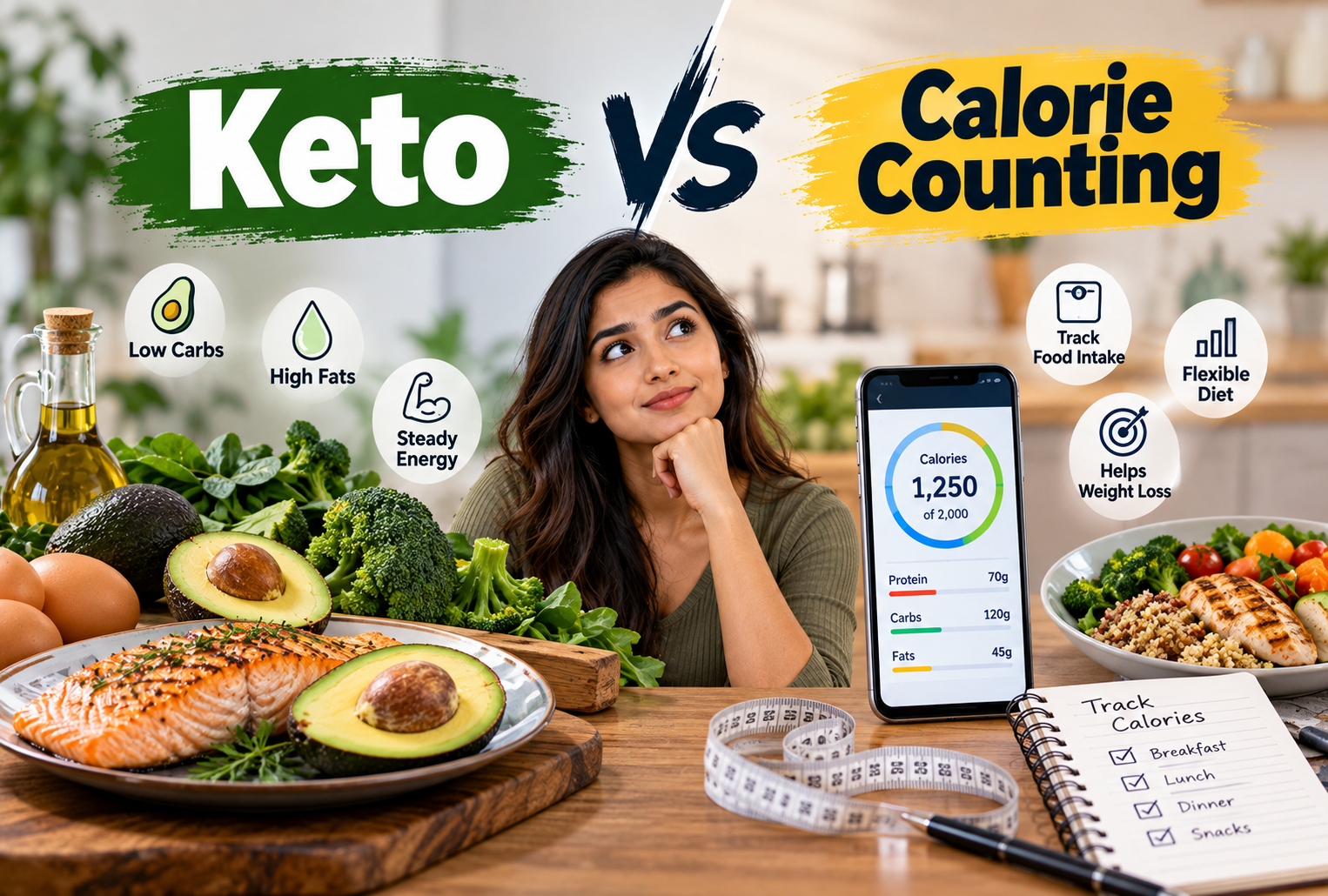
Choosing a weight-loss plan can be confusing because different diets promise different results. Some people prefer the ketogenic diet, which focuses on significantly reducing carbohydrate intake, while others track calories to manage how much energy they consume each day.
A recent discussion highlighted by The Indian Express Fitness section examines an important question: is keto or calorie counting easier to follow over the long term?
The answer depends on food preferences, daily routines, health needs and how easily someone can maintain their eating habits. Rather than focusing only on quick results, it is important to consider whether a plan supports balanced nutrition and long-term consistency.
What Is the Keto Diet?
The ketogenic diet, commonly called keto, is a low-carbohydrate, high-fat eating pattern. It sharply limits carbohydrates and encourages the body to use fat and produce ketones for energy.
Foods commonly included in a keto-style diet may include:
-
Eggs and fish
-
Meat and poultry
-
Nuts and seeds
-
Oils and selected fats
-
Low-carbohydrate vegetables such as spinach, cauliflower and cucumber
Foods such as bread, rice, sugary drinks, sweets and many other carbohydrate-rich products are significantly restricted.
Potential Benefits of Keto
Some people find keto helpful because limiting food choices can make their eating routine feel structured. It may also lead to short-term weight loss, partly because changes in carbohydrate intake affect the body's stored water.
However, keto can be difficult to maintain, particularly for people who regularly eat rice, roti, fruit, legumes and other carbohydrate-rich foods. A poorly planned version may also lack sufficient fibre or certain nutrients.
People with medical conditions, or those taking medicines that affect blood glucose, should seek professional medical advice before starting a restrictive diet.
What Is Calorie Counting?
Calorie counting involves estimating how much energy a person consumes through food and drinks. It can help people understand portion sizes and identify eating habits that may be contributing to weight gain.
Rather than eliminating an entire food group, calorie counting focuses on total energy intake. Someone may be able to include rice, roti, fruit, vegetables, dairy products and occasional treats while keeping their overall eating pattern appropriate for their needs.
Potential Benefits of Calorie Counting
Calorie counting can offer flexibility because it does not automatically prohibit particular foods. It may also help people recognise high-calorie snacks, sugary beverages or oversized portions.
However, tracking every meal can become time-consuming. Food labels, restaurant portions and cooking oils can make calorie estimates inaccurate. For some people, detailed tracking can also become stressful or overly restrictive.
A sustainable approach should not require someone to feel guilty about every meal or ignore hunger and fullness cues.
Keto vs Calorie Counting: Key Differences
| Feature | Keto Diet | Calorie Counting |
|---|---|---|
| Main approach | Restricts carbohydrates | Tracks total energy intake |
| Food flexibility | Usually more limited | Generally more flexible |
| Daily tracking | Carbohydrate intake and food choices | Calories and portion sizes |
| Potential challenge | Avoiding many familiar foods | Maintaining accurate tracking |
| Long-term success | Depends on personal suitability and consistency | Depends on personal suitability and consistency |
Neither method guarantees better results for everyone. Weight changes depend on several factors, including overall food intake, activity, sleep, health conditions and the ability to maintain the plan.
Which Method Is Easier to Follow Long Term?
Keto May Suit People Who Prefer Clear Food Rules
Some people prefer a defined eating pattern with clear limits on carbohydrate-rich foods. They may find this structure easier than estimating calories at every meal.
However, social events, travel and traditional meals can make keto challenging. Anyone considering it should plan meals carefully to ensure adequate nutrition.
Calorie Counting May Suit People Who Want Flexibility
Calorie counting can be more adaptable for people who want to continue eating a variety of foods. It may help them make gradual adjustments to portion sizes without eliminating familiar meals.
Still, constant tracking is not necessary or suitable for everyone. Some people may do better with simple portion guidance and regular, balanced meals instead.
Consistency Matters More Than Choosing a Popular Diet
A restrictive plan that is difficult to maintain may not be as useful as a balanced routine that someone can follow comfortably. The most appropriate approach is one that supports adequate nutrition, realistic habits and gradual progress.
For additional evidence-based information about healthy weight management, readers can explore the NHS guide to losing weight and the CDC's guidance on healthy weight.
Practical Tips for Sustainable Weight Management
Regardless of the method chosen, several habits can support a healthier routine:
-
Prioritise balanced meals: Include vegetables, suitable protein sources, whole grains or other fibre-rich foods, and healthy fats.
-
Watch portion sizes: Adjust portions to your needs instead of unnecessarily eliminating entire food groups.
-
Choose regular physical activity: Walking, strength training and other enjoyable activities can support overall health.
-
Get adequate sleep: Consistent sleep habits can help with energy, appetite regulation and recovery.
-
Set realistic goals: Gradual, sustainable progress is generally more practical than extreme short-term restrictions.
-
Review your approach: If a plan causes persistent fatigue, dizziness, nutritional concerns or excessive stress, seek guidance from a qualified healthcare professional.
Conclusion
Keto and calorie counting take different approaches to weight management. Keto restricts carbohydrates, while calorie counting focuses on overall energy intake. Both may help some people manage their weight, but neither is automatically the best choice for everyone.
The most suitable plan is one that is nutritionally balanced, realistic for your lifestyle and manageable over time. If you have an underlying health condition or take regular medication, consult a qualified healthcare professional before making major dietary changes.
Instead of choosing a diet solely because it is popular, focus on habits that you can maintain and that support your overall health.