
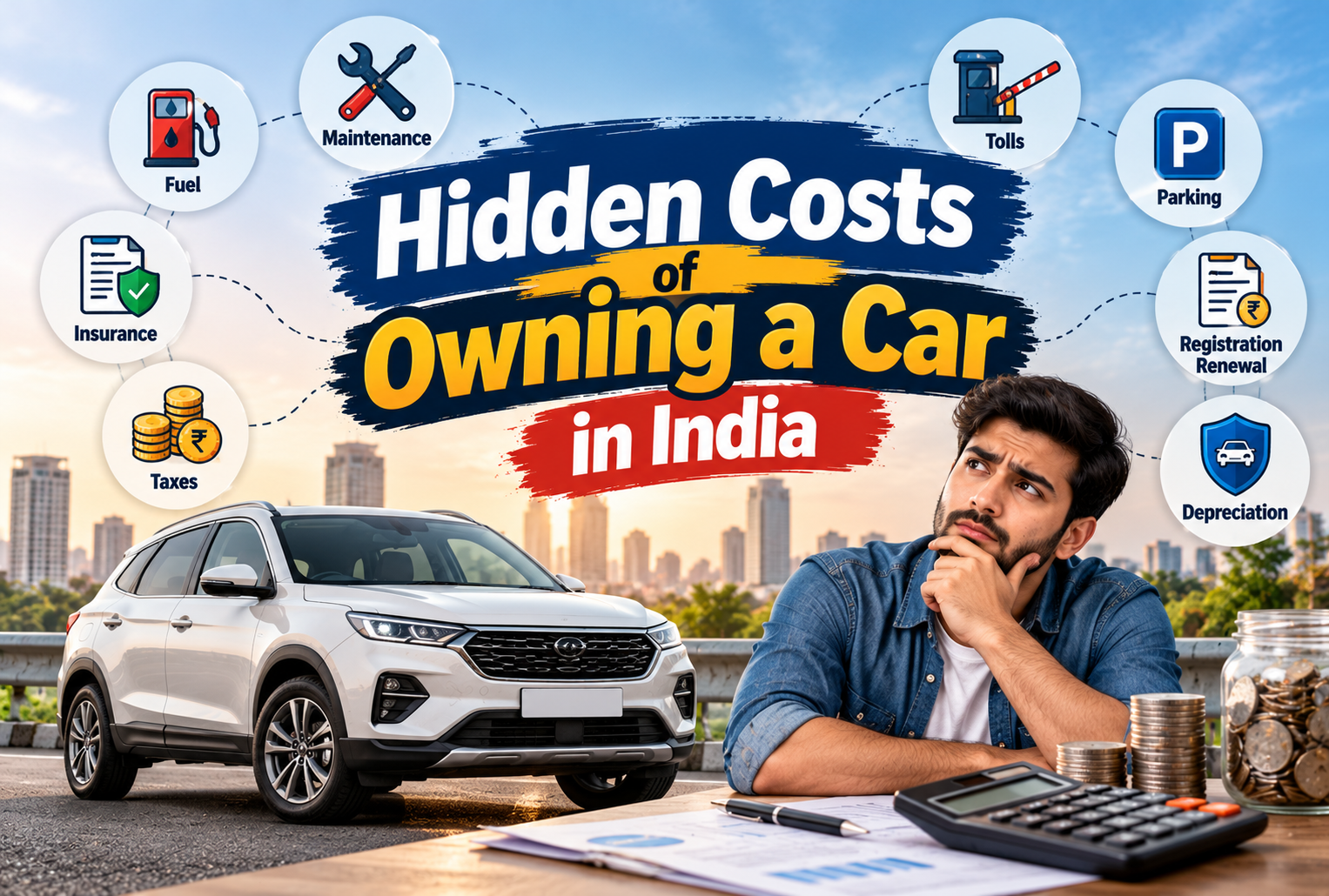
Buying a car is a big dream for many people in India. Whether you are purchasing your first car or upgrading to a new model, owning a vehicle brings comfort, freedom, and convenience. You can travel with your family, go on weekend trips, and manage your daily routine without depending on public transport.
However, buying a car is not just about paying the showroom price. There are several hidden costs of owning a car in India that many buyers do not consider before making a purchase.
From fuel expenses and car insurance to regular servicing, parking charges, repairs, and depreciation, these additional costs can increase your overall spending. Some expenses occur every month, while others appear unexpectedly after a few years.
Understanding the total cost of car ownership in India can help you choose the right vehicle, plan your budget, and avoid unnecessary financial stress.
In this guide, we will discuss the major expenses of owning a car, how much they may cost, and simple ways to save money on vehicle maintenance.
1. Car Insurance Costs
Car insurance is one of the most important car ownership expenses that every buyer should consider. In India, third-party motor insurance is mandatory for vehicles used on public roads.
Many people pay attention to insurance only when purchasing a new car. However, insurance is a recurring expense that continues throughout the vehicle's life.
The cost of insurance depends on several factors, including the car's model, age, location, insured value, and type of coverage.
Types of Car Insurance
-
Third-Party Insurance: Covers legal liability for injury or damage caused to third parties, subject to policy terms.
-
Comprehensive Insurance: Provides broader protection, including certain damages to your own vehicle.
-
Zero Depreciation Cover: An optional add-on that can reduce depreciation deductions on eligible replacement parts during covered claims.
-
Roadside Assistance: An optional service that can help during breakdowns or emergencies.
For many common passenger cars, annual insurance expenses can range from several thousand rupees to ₹20,000 or more, depending on the policy and vehicle.
Money-Saving Tip: Compare insurance policies before renewal and choose coverage according to your needs. Avoid purchasing unnecessary add-ons.
2. Fuel Expenses for Daily Driving
Fuel is one of the biggest monthly car expenses in India. Whether you own a petrol, diesel, CNG, or electric vehicle, you need to consider the cost of running it regularly.
Fuel expenses depend on your daily travel distance, vehicle mileage, traffic conditions, and fuel prices.
For example, suppose your car delivers an average mileage of 15 km per litre and you drive approximately 1,000 km every month.
If petrol costs ₹100 per litre, your estimated monthly fuel expense would be around ₹6,667.
This means you could spend approximately ₹80,000 annually on fuel alone.
How to Reduce Fuel Expenses
-
Maintain proper tyre pressure.
-
Avoid unnecessary acceleration and sudden braking.
-
Service your car regularly.
-
Switch off the engine during long stops when appropriate.
-
Plan routes to avoid unnecessary travel.
-
Avoid carrying excessive weight in the vehicle.
Following these habits can help improve fuel efficiency and reduce your car running costs.
3. Regular Car Servicing and Maintenance
Every car requires regular servicing to remain safe and reliable. Many buyers underestimate the car maintenance cost in India, especially during the first few years of ownership.
Regular maintenance includes checking the engine, brakes, tyres, filters, and other important vehicle components.
Although some manufacturers offer complimentary scheduled services, these may not include the cost of oil, filters, replacement parts, or other consumables.
Common Car Maintenance Expenses
-
Engine Oil Replacement: Helps maintain proper engine lubrication.
-
Air Filter Replacement: Supports clean airflow into the engine.
-
Brake Maintenance: Keeps the braking system working safely.
-
Wheel Alignment: Helps maintain proper tyre positioning.
-
Battery Inspection: Helps identify battery-related problems.
-
Coolant and Fluid Checks: Supports the proper functioning of vehicle systems.
For a common hatchback or compact car, routine annual servicing may cost approximately ₹5,000 to ₹12,000, although the actual amount depends on the model, service interval, and work required.
Important Tip: Follow the manufacturer's recommended maintenance schedule instead of waiting for problems to appear.
4. Parking Charges and Garage Expenses
Parking is another hidden expense that many car buyers forget to include in their budget.
If you live in a crowded city such as Delhi, Mumbai, Bengaluru, or Pune, finding a safe parking space can sometimes be difficult.
Some residential societies charge additional parking fees, while people without private parking may need to rent a parking space.
You may also need to pay parking charges at shopping malls, offices, airports, and other public places.
Common Parking Expenses
-
Monthly residential parking charges
-
Office parking fees
-
Shopping mall parking
-
Airport parking
-
Paid public parking areas
For example, if you spend ₹2,000 every month on parking, your annual expense becomes ₹24,000.
Before purchasing a vehicle, check whether you have enough parking space at home and work.
5. Car Depreciation and Resale Value
One of the biggest hidden costs of owning a car in India is depreciation.
Depreciation means the reduction in your vehicle's market value over time. Unlike fuel or maintenance, this expense does not require a direct monthly payment, but it affects the amount you receive when selling your car.
New cars often experience significant depreciation during the first few years.
For example, suppose you purchase a car for ₹10 lakh. After five years, its resale value may be around ₹5.5 lakh, depending on the vehicle's condition and market demand.
In this example, your car has lost ₹4.5 lakh in value.
Factors That Affect Car Resale Value
-
Vehicle brand and model
-
Total kilometres driven
-
Service and maintenance history
-
Accident history
-
Overall vehicle condition
-
Market demand
-
Age of the vehicle
Money-Saving Tip: Choose a car with a good resale record, maintain it properly, and keep all service documents.
6. Car Loan Interest and EMI Charges
Many people purchase cars through bank loans or finance companies. While monthly EMIs make buying a vehicle easier, loan interest increases the total cost of car ownership in India.
When you take a car loan, you pay interest in addition to the borrowed amount.
For example, if you take a loan of ₹7 lakh at an annual interest rate of 9% for five years, your approximate monthly EMI would be ₹14,530.
Over five years, you would repay around ₹8.72 lakh, including approximately ₹1.72 lakh in interest.
Other financing expenses may include processing fees, documentation charges, and applicable prepayment or foreclosure charges.
How to Reduce Car Loan Expenses
-
Compare interest rates from different lenders.
-
Make a larger down payment if affordable.
-
Choose a suitable loan tenure.
-
Check processing fees and other charges.
-
Avoid borrowing more than you need.
Before finalising a loan, calculate the complete repayment amount rather than focusing only on the monthly EMI.
7. Tyre Replacement Costs
Tyres are essential for safe driving, but they also require replacement after a certain period or level of wear.
The lifespan of car tyres depends on road conditions, driving habits, tyre quality, and regular maintenance.
Driving on damaged roads, maintaining incorrect tyre pressure, and ignoring wheel alignment can increase tyre wear.
For a typical hatchback, replacing all four tyres may cost approximately ₹16,000 to ₹30,000, depending on the tyre size and brand.
Larger SUVs and premium vehicles may have higher tyre replacement costs.
Tips to Increase Tyre Life
-
Check tyre pressure regularly.
-
Avoid driving over potholes at high speeds.
-
Get wheel alignment checked when necessary.
-
Inspect tyres for damage and uneven wear.
-
Rotate tyres according to manufacturer recommendations.
Proper tyre maintenance can help improve safety and reduce unnecessary replacement expenses.
8. Battery Replacement Expenses
A car battery is another component that may require replacement after a few years.
The battery powers the vehicle's electrical systems and helps start the engine in conventional petrol and diesel cars.
Battery life depends on usage, climate, vehicle condition, and maintenance.
For many regular passenger cars, a replacement 12-volt battery may cost approximately ₹4,000 to ₹10,000.
Cars with start-stop technology or specialised batteries may cost more.
Signs Your Car Battery May Need Attention
-
Slow engine starting
-
Dim headlights
-
Electrical problems
-
Frequent jump-start requirements
-
Battery warning lights
If you notice these signs, have the battery and charging system inspected.
9. Unexpected Car Repair Costs
Even if you maintain your car properly, unexpected mechanical problems can occur.
These repairs are particularly important when considering used car maintenance expenses.
Older vehicles may require more frequent repairs because of component wear.
Common unexpected repairs include:
-
Air-Conditioning Repairs: Problems with cooling or electrical components.
-
Clutch Replacement: May become necessary due to wear.
-
Suspension Repairs: Can result from rough road conditions.
-
Brake Component Replacement: Important for vehicle safety.
-
Electrical Repairs: May involve sensors, wiring, or other components.
-
Engine Repairs: Can become expensive depending on the problem.
Repair costs vary widely by vehicle and fault.
Keeping an emergency maintenance fund can help you manage these expenses without disturbing your monthly budget.
10. Toll Taxes and Highway Charges
If you frequently travel on highways or expressways, toll charges can increase your overall vehicle expenses.
People who commute through toll plazas regularly may spend a considerable amount every month.
The exact cost depends on the route, vehicle category, and travel frequency.
For example, if you spend ₹150 on tolls during each working day and travel for 22 days, your monthly toll expense would be ₹3,300.
Over a year, this could become a significant additional cost.
Money-Saving Tip: Check available routes, review FASTag transactions, and consider applicable pass options if you travel frequently through the same toll plazas.
11. Car Washing and Cleaning Expenses
Keeping your car clean is important for maintaining its appearance and protecting its interior and exterior.
However, regular cleaning can also add to your monthly car expenses in India.
Some people wash their cars at home, while others use professional cleaning services.
Common Car Cleaning Expenses
-
Exterior washing
-
Interior vacuum cleaning
-
Seat cleaning
-
Dashboard cleaning
-
Car polishing
-
Interior detailing
Basic washing may cost a few hundred rupees per visit, while professional detailing can be considerably more expensive.
You can reduce these expenses by cleaning your car regularly at home and using professional services only when needed.
12. Traffic Fines and Legal Expenses
Traffic fines are avoidable expenses, but they can still affect your car ownership budget.
Violating traffic rules may result in penalties, depending on the offence and applicable regulations.
Common reasons for traffic fines include:
-
Overspeeding
-
Illegal parking
-
Jumping traffic signals
-
Driving without valid insurance
-
Driving without a valid licence
-
Not wearing a seat belt
-
Using a mobile phone while driving in violation of traffic rules
Car owners must also keep required documents updated, including registration, insurance, and pollution certificates where applicable.
Following traffic rules helps protect both your safety and your finances.
13. Car Accessories and Additional Features
When purchasing a new car, dealerships may offer several accessories and optional packages.
These can include seat covers, floor mats, infotainment upgrades, dash cameras, parking sensors, and exterior protection products.
Although some accessories are useful, buying too many can increase your initial spending.
For example, purchasing accessories worth ₹20,000–₹40,000 can significantly increase the final bill.
Before adding accessories, consider whether they are necessary for your daily driving needs.
Choose practical features that improve safety, comfort, or convenience instead of spending money on unnecessary upgrades.
14. Annual Car Maintenance Budget
Preparing an annual car maintenance budget is one of the easiest ways to manage vehicle expenses.
Instead of waiting for a large repair bill, set aside a small amount every month for servicing and future replacements.
Your maintenance budget should consider:
-
Regular servicing
-
Engine oil and filter changes
-
Tyre replacement
-
Battery replacement
-
Brake maintenance
-
Unexpected repairs
For many common mass-market cars, keeping approximately ₹8,000–₹20,000 annually for routine servicing and minor maintenance may be a reasonable starting point.
However, major repairs, tyres, and other replacements may require additional savings.
The actual budget should depend on your vehicle's age, model, and usage.
15. Long-Term Ownership and Replacement Costs
Car ownership expenses often increase as a vehicle becomes older.
After several years, some components may require replacement because of normal wear and tear.
Older vehicles can also become less fuel-efficient if they are not maintained properly.
In addition, resale value generally decreases as the car ages.
If you plan to keep your vehicle for 8–10 years, consider its long-term maintenance requirements and the availability of spare parts.
A car with affordable parts, reliable service support, and reasonable maintenance requirements may offer better value over time.
Estimated Monthly Cost of Owning a Car in India
To understand the overall expenses, here is an example of the monthly car expenses in India for a petrol hatchback driven approximately 1,000 kilometres per month.
|
Expense |
Estimated Monthly Cost |
|---|---|
|
Fuel |
₹6,667 |
|
Insurance Savings |
₹1,500 |
|
Routine Servicing Savings |
₹700 |
|
Parking Charges |
₹1,500 |
|
Tyre and Battery Savings |
₹700 |
|
Cleaning and Miscellaneous |
₹500 |
|
Unexpected Repair Savings |
₹800 |
|
Total Estimated Monthly Cost |
₹12,367 |
These figures are illustrative and can vary depending on the vehicle, location, fuel price, and driving habits.
The example does not include car loan EMI, depreciation, toll charges, or initial purchase expenses.
This shows why understanding the cost of owning a car in India is important before making a purchase.
New Car vs Used Car: Which Is More Affordable?
Choosing between a new and used car is an important financial decision.
A new car usually offers a manufacturer's warranty, modern features, and fewer immediate maintenance concerns.
However, new vehicles generally have higher purchase prices and may experience greater depreciation during the initial years.
Used cars often have lower purchase prices, making them attractive for budget-conscious buyers.
On the other hand, older vehicles may require more frequent maintenance and unexpected repairs.
Advantages of Buying a New Car
-
Manufacturer warranty coverage
-
Modern safety and convenience features
-
Generally predictable initial maintenance
-
No previous ownership history
-
Wider choice of models and variants
Advantages of Buying a Used Car
-
Lower initial purchase price
-
Potentially lower depreciation loss
-
More vehicle options within a limited budget
-
Possibility of purchasing a higher variant at a lower price
Before buying a used car, always check its service history, accident records where available, and mechanical condition.
The best choice depends on your budget, driving requirements, and long-term ownership plans.
Smart Ways to Reduce Car Ownership Costs
Owning a car does not always have to be expensive. With proper planning and a few practical habits, you can control your expenses.
Choose a Fuel-Efficient Vehicle
If you travel long distances regularly, fuel efficiency should be one of your main priorities. A car with better real-world mileage can help reduce monthly fuel spending.
Follow Regular Maintenance Schedules
Timely servicing can help identify small problems before they become expensive repairs.
Compare Insurance Policies
Review insurance coverage and premiums every year. Select suitable protection without paying for unnecessary add-ons.
Avoid Unnecessary Car Accessories
Focus on essential accessories that improve safety and convenience.
Maintain Proper Driving Habits
Smooth acceleration, safe braking, and avoiding excessive idling can help improve fuel efficiency.
Plan for Future Expenses
Keep a separate fund for insurance renewals, maintenance, tyres, and unexpected repairs.
Track Your Monthly Spending
Record fuel bills, toll charges, servicing expenses, and other vehicle-related costs. This helps you understand where your money is going.
Things to Check Before Buying a Car in India
Before purchasing your next vehicle, consider the complete ownership experience rather than focusing only on the purchase price.
Here are some important questions to ask yourself:
-
Can I afford the monthly EMI along with fuel and maintenance?
-
How much will I drive every month?
-
Does the car offer good real-world mileage?
-
Are spare parts and service centres easily available?
-
What are the expected insurance renewal costs?
-
Will I have to pay additional parking charges?
-
Does the vehicle have a reasonable resale value?
-
Can I manage unexpected repair expenses?
Answering these questions can help you make a more practical and financially comfortable buying decision.
Conclusion
Buying a car is an important financial decision, and understanding its long-term expenses is just as important as choosing the right model.
The hidden costs of owning a car in India include much more than fuel and monthly EMIs. Insurance renewals, regular servicing, parking charges, tyre replacements, unexpected repairs, and depreciation can significantly increase the amount you spend over time.
Before purchasing a vehicle, calculate your monthly car expenses, consider future maintenance requirements, and choose a car that comfortably fits your budget.
Whether you are planning to buy a new vehicle or a used one, understanding the total cost of car ownership in India will help you make a smarter decision.
A well-planned car purchase allows you to enjoy the comfort and convenience of your vehicle without unnecessary financial pressure.